

『Flow Meter Prover Operations: Utilizing Master Meters and Ball Provers for Field Verification』Related information(flow rotameter|digital flow meter|balo meter|hydraulic flow meter|volumetric meter|positive displacement meter|pitot tube flow meter|displacement meter|cfm meter|variable area flow meter|inline flow meter|differential pressure flow meter|calibrated flow meter|velocity meter|paddle wheel flow meter|oval gear flow meter|anemometer hvac|multiphase flow meter|doppler flow meter|thorpe tube flowmeter|heat flow meter)
Flow Meter Prover Operations: Utilizing Master Meters and Ball Provers for Field Verification
Quick Answer: A flow meter prover checks meter accuracy in the field without removing the meter from the pipe. Master meters and ball provers are two common tools for this work. Silver Instruments supplies master meters and process flow meters for water, oil, gas, chemical and food plants across Southeast Asia, Oceania, Latin America, Africa and the Middle East.
What Is a Flow Meter Prover?
A flow meter prover is a reference device used to verify the reading of an installed flow meter. The prover gives a known volume or mass. The operator compares the prover output with the meter output. The difference is the meter error. Field verification is not a full laboratory calibration. It is a practical check that catches drift, installation problems and sensor damage.
Most plants do not need to remove the meter for a field check. That saves money and reduces downtime. The proving run uses the same pipe, the same fluid and the same operating conditions as normal service. This gives a realistic result.
Master Meter Operations in Field Verification
A master meter is a flow meter with better accuracy than the unit under test. Typical master meter accuracy is 0.1 percent to 0.2 percent. The master meter is installed in series with the field meter. Both meters see the same flow for the same time. The operator records total volume or mass from both meters. The error is calculated as a percentage.
Most engineers use master meters on water lines, chemical dosing lines and cooling water loops. For example, a water treatment plant in Thailand checked a DN200 electromagnetic flow meter with a clamp-on ultrasonic master meter. The plant did not want to cut the pipe. The clamp-on master meter was installed in 30 minutes. The measured deviation was 1.1 percent. The plant limit was 2 percent. The meter stayed in service.
Ball Prover Operations for Liquid Hydrocarbons
A ball prover is a mechanical prover used for liquid hydrocarbons. It has a precision bored pipe section, a sphere, two detectors and a counter. The sphere moves with the liquid. When the sphere passes the first detector, the counter starts. When it passes the second detector, the counter stops. The known volume between detectors is compared with the meter pulse count.
Ball provers are common in fuel terminals, crude oil loading and diesel transfer. Operators in Saudi Arabia, Nigeria and Indonesia use ball provers to verify turbine meters and positive displacement meters on custody transfer lines. A typical repeatability target is 0.02 percent for five consecutive runs. If three runs give repeatability above 0.05 percent, check for gas pockets, leaks or valve leakage.
Which Flow Meters Can Be Proven in the Field?
Silver Instruments supplies Coriolis mass flow meters, electromagnetic flow meters, ultrasonic flow meters, vortex flow meters and oval gear flow meters. Each type has a preferred proving method. Coriolis meters can be master meters for mass flow. Electromagnetic meters are usually checked with a master meter or a clamp-on ultrasonic meter. Oval gear meters on diesel or fuel oil can be proved with a ball prover or a master meter. Vortex meters need stable flow and a master meter with fast data logging.
Before a proving run on a water line, check the liquid conductivity. Silver Instruments electromagnetic flow meters need at least 5 µS/cm. For diesel or heavy fuel oil with viscosity up to 100 cP, use an oval gear flow meter or a Coriolis mass meter. Both handle pipe sizes from DN15 to DN300.
Field Verification Procedure in Prac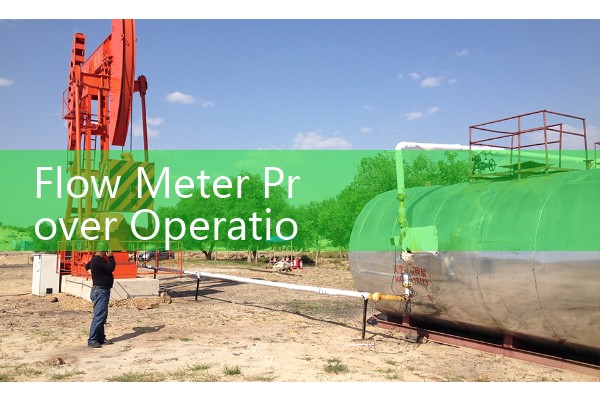
A standard field verification takes less than one shift. The crew checks installation, wiring, zero point and flow profile. The prover is connected. Flow is held steady. The operator records at least three runs. If the error is within the plant limit, the meter continues in service. If not, the meter is removed for factory calibration or replaced.
Here is the thing. Many field failures come from bad installation, not from the meter itself. A pulp plant in Indonesia found a vortex meter reading 6 percent low. The cause was a short straight pipe after a control valve. The meter was moved to a better location. The error dropped to 0.8 percent.
In oil and gas areas with ATEX Zone 1 classification, use explosion-proof flow meters and provers. Silver Instruments can supply Coriolis mass flow meters with ATEX Zone 1 certificates and PT100 temperature compensation. The 4-20 mA HART output sends flow, density and temperature data to the control room during a proving run.
Recommended Products for Prover Operations
For water and wastewater field checks, use a Silver Instruments electromagnetic flow meter as the main meter and a clamp-on ultrasonic flow meter as the temporary master meter. The electromagnetic meter accuracy is 0.5 percent of reading. The clamp-on ultrasonic meter accuracy is 1 percent. This pair works well from DN50 to DN1200.
For oil, diesel and fuel oil, use a Silver Instruments oval gear flow meter with 0.5 percent accuracy or a Coriolis mass flow meter with 0.1 percent to 0.2 percent accuracy. The Coriolis mass meter can be a master meter for mass flow verification on tanker loading. Add a pressure transmitter with 4-20 mA HART output to monitor line pressure during the proving run.
FAQ: Flow Meter Prover Operations
Question 1: What is the difference between a master meter and a ball prover?
A master meter is a flow meter used as a reference. It is installed in series with the meter under test. A ball prover is a mechanical pipe prover with a known volume. It is used mainly for liquid hydrocarbons and custody transfer.
Question 2: How often should we prove a flow meter?
For custody transfer, monthly or quarterly is common. For internal process meters, every 6 to 12 months is enough. The interval depends on fluid type, meter type and local regulations.
Question 3: Can a clamp-on ultrasonic flow meter be used as a master meter?
Yes. A clamp-on ultrasonic flow meter is practical for temporary verification. It works well on clean liquids without gas bubbles. It is not suitable for heavy slurries or very low conductivity oil. Use a portable model with 1 percent accuracy or better.
Question 4: Which industries use ball provers?
Oil and gas terminals, tank farms, refineries and jet fuel depots use ball provers. They are also used in marine loading and some petrochemical plants. Water and food plants rarely need ball provers.
Question 5: What information does Silver Instruments need to recommend a prover setup?
Send us the pipe size (DN), flow rate range, fluid name, viscosity, pressure (bar), temperature (°C) and accuracy target. We will recommend a master meter or prover pairing within one business day.
Contact Silver Automation Instruments for Field Verification Support
Silver Automation Instruments is a flow meter manufacturer and supplier based in China. We ship to Southeast Asia, Oceania, Latin America, Africa and the Middle East. Tell us your application and we will match a flow meter and prover setup for your plant.
Tel: +86-25-68650347
WhatsApp: +86-25-52155837
WeChat: +86 15365082610
Website: flow-meter.com.au
 Hot Product
 Related AD