


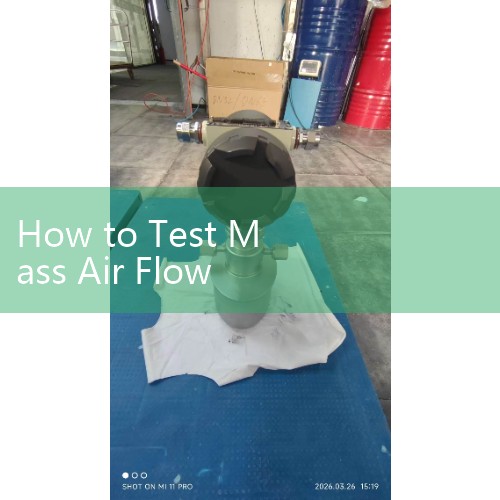
『How to Test Mass Air Flow Meter: Cleaning Hot Wire Elements to Restore Tuning Curves』Related information(flow rotameter|digital flow meter|balo meter|hydraulic flow meter|volumetric meter|positive displacement meter|pitot tube flow meter|displacement meter|cfm meter|variable area flow meter|inline flow meter|differential pressure flow meter|calibrated flow meter|velocity meter|paddle wheel flow meter|oval gear flow meter|anemometer hvac|multiphase flow meter|doppler flow meter|thorpe tube flowmeter|heat flow meter)

How to Test Mass Air Flow Meter: Cleaning Hot Wire Elements to Restore Tuning Curves
Quick Answer: A dirty hot wire element causes unstable mass air flow readings and shifts the tuning curve. You can test the sensor with a multimeter and a steady air source, then clean the wire with 99 percent isopropyl alcohol. In many cases cleaning brings the output back within 2 to 3 percent of the original factory curve. If that fails, replace the thermal mass flow meter or send the unit for recalibration.
Hot wire mass air flow meters work by measuring the cooling effect of air passing over a heated sensing element. The meter electronics translate that cooling rate into mass flow. Dust, oil mist, or moisture can coat the wire. This coating changes heat transfer. The result is a reading error that gets worse over time. Many plants see this on blower air lines, combustion air ducts, and aeration pipes.
What You Need for the Test
You need a digital multimeter that reads resistance and DC millivolts. You also need a stable air source with a known flow rate, such as a calibrated blower or a reference flow meter in the same line. A loop calibrator for 4-20 mA output helps on transmitters. Keep the factory datasheet nearby. It shows the resistance of the heater element and the PT100 sensor at 20 degrees C or 25 degrees C.
Step by Step Test of a Hot Wire Element
Disconnect power from the flow meter first. Remove the sensor from the pipe or duct. Record the visual condition of the hot wire and the reference PT100. Most engineers skip this step. In practice, the visual check shows oil film or dust before you spend time on resistance tests. Look for black deposits, oil film, or lint. Measure the heater resistance at room temperature with the multimeter. Compare that value with the datasheet. A shift of more than 5 percent often means contamination or damage. Measure the PT100 resistance too. At 25 degrees C it should be close to 109.73 ohm. At 20 degrees C it should be close to 107.79 ohm.
Next install the sensor back into a known air flow. Run the air source at zero flow and then at three points: 10 percent, 50 percent, and 100 percent of span. Check the analog output or digital reading at each point. Write down the values. Compare them with the tuning curve shown in the manual. If the zero flow reading drifts more than 1 percent of full scale, the element needs cleaning.
How to Clean the Hot Wire Elements
Use 99 percent isopropyl alcohol or a dedicated electronics cleaner. Because the hot wire is thin and brittle, do not use a brush, a screwdriver, or compressed air directly on the hot wire. Soak a foam swab in the alcohol. Gently wipe the hot wire and the surrounding sensor body. But heavy oil mist from biogas or compressor air may need a dedicated electronics cleaner. Spray the sensor and let it drain for 15 minutes. Repeat the process once if residue remains. A paint manufacturer in Southeast Asia used this method on a thermal mass flow meter for solvent vapor air flow. The r
_600x400.jpg)
Restoring Tuning Curves After Cleaning
Run the zero flow check again after the sensor is completely dry. Then check the same 10, 50, and 100 percent flow points. Compare the new values with the original tuning curve. If the error at 50 percent span is below 2 percent of reading, the cleaning worked. If the error is between 2 and 5 percent, you may need a field adjustment or a new calibration. If the error stays above 5 percent, the hot wire is likely damaged or aged. Replace the sensing element or the meter.
We have seen this on customer sites many times. A water treatment plant in Vietnam had a thermal mass flow meter on aeration blowers. The reading drifted low by 8 percent. Cleaning restored the output to within 1.5 percent of the original curve. No recalibration was needed.
When Replacement Makes More Sense
Hot wire elements become brittle after years of service. Corrosion from wet air, salt spray, or acid gases can change the wire surface. If cleaning does not restore the tuning curve, do not spend more time on field repairs. Ask for a replacement sensor or a new inline thermal mass flow meter. We supply inline meters from DN15 to DN200 and insertion probes for larger ducts. ATEX Zone 1 certified options are available for gas lines that need explosion protection. Specify the gas type, pressure in bar, temperature in degrees C, pipe size DN, and flow range in kg/h or m3/h. Silver Automation Instruments supplies thermal mass flow meters for air, biogas, natural gas, and process gas lines. You can send your operating data to Tel: +86-25-68650347 or WhatsApp: +86-25-52155837. WeChat is available at +86 15365082610.
Frequently Asked Questions
Q: How often should I clean a hot wire mass air flow meter?
In clean air service, check every 12 months. In dusty, oily, or wet gas service, check every 3 to 6 months. If the output drifts more than 1 percent of full scale, clean the element.
Q: Can I use brake cleaner on the hot wire element?
Avoid brake cleaner. It can leave a residue that changes heat transfer. Use 99 percent isopropyl alcohol or an electronics cleaner made for sensors.
Q: What output signal should a healthy thermal mass flow meter show at zero flow?
A 4-20 mA HART unit should read 4.00 mA at zero flow after warm up. A small drift of 0.05 mA is normal. Larger drift points to contamination or moisture on the sensor.
Q: Does cleaning always restore the tuning curve?
Not always. If the wire is aged, pitted, or coated with baked on deposits, cleaning may only give a partial recovery. Replacement is the realistic fix when the error stays above 5 percent.
Q: Can Silver Automation Instruments calibrate a hot wire mass air flow meter?
Yes. Send us the gas type, flow range, pipe size DN, temperature, and pressure. We can check the unit against a reference flow standard and supply a new meter if needed.
 Hot Product
 Related AD