

『Fire Pump Flow Meter: NFPA Compliance Diagnostic Equipment』Related information(flow rotameter|digital flow meter|balo meter|hydraulic flow meter|volumetric meter|positive displacement meter|pitot tube flow meter|displacement meter|cfm meter|variable area flow meter|inline flow meter|differential pressure flow meter|calibrated flow meter|velocity meter|paddle wheel flow meter|oval gear flow meter|anemometer hvac|multiphase flow meter|doppler flow meter|thorpe tube flowmeter|heat flow meter)
Fire Pump Flow Meter: NFPA Compliance Diagnostic Equipment
Quick Answer: Fire pump flow meters that meet NFPA 20 requirements need documented accuracy and diagnostic self-verification. Silver Instruments supplies clamp-on ultrasonic flow meters with real-time signal diagnostics that satisfy the testing standards. This article explains what specifiers and facility managers actually need when buying a meter for annual fire pump testing.
What NFPA 20 Says About Flow Measurement
NFPA 20 Chapter 6.5 requires a listed flow measuring device on the discharge side of every fire pump. The meter must provide continuous flow data during the acceptance test and the annual flow test. Because the fire pump builds pressure quickly, any flow meter installed on the line must handle sudden velocity changes without losing signal. Engineers often miss that the standard does not specify one flow technology. But the data must be repeatable, verifiable, and easy to record for the AHJ (Authority Having Jurisdiction). A flow meter with onboard data logging and diagnostic tools cuts engineer hours on the day of the test.
Ultrasonic Against Electromagnetic: What Works Better for Fire Pump Testing
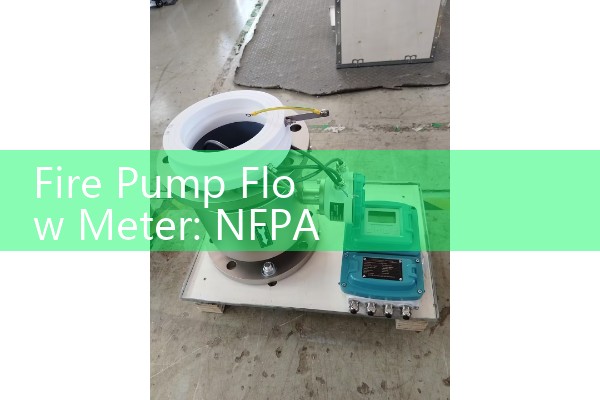
For permanent installation, in-line electromagnetic flow meters are common. A DN150 wafer mag meter with PTFE liner and Hastelloy electrodes handles 120 psi fire water without drift. But many facilities cannot shut down to cut pipe. Here is the thing, a portable clamp-on ultrasonic flow meter often solves the problem. Silver Automation Instruments models, such as the SUF-300H clamp-on flow meter, strap onto the outside of a schedule 40 or schedule 80 steel pipe in minutes. They read through pipe wall and give you real-time flow rate, totalized flow, and signal quality on the display. Because the fire pump test demands a stable reading, the meter must have a diagnostic function that shows signal strength and sound speed. If those numbers drop, you know the coupling or placement is wrong before you record bad data.
Diagnostic Data You Must Check on Site
NFPA compliance is not just about a number on screen. The meter must prove its measurement is valid. Our clamp-on meters display cross-correlation diagnostics and AGC (automatic gain control) levels on the same screen. Most engineers skip this part, but it matters. The diagnostic screen reveals three things: transducer alignment, liquid aeration, and wall thickness mismatch. For fire water systems with trapped air after a pump start, a low signal level warns you of bubble interference. The meter output can be 4-20 mA to a building BMS or to a paperless recorder. Silver Instruments also supplies 8-channel paperless recorders that store test data as CSV files for the NFPA report.
How to Size a Flow Meter for Your Fire Pump Loop
The test flow range typically goes from 0% to 150% of the pump rated capacity. If the fire pump rated flow is 5000 L/min, the meter must measure accurately from 0 to 7500 L/min. For a DN200 pipe, that translates to a flow velocity of roughly 0 to 4 m/s. A clamp-on ultrasonic meter with a velocity range of 0.01 to 25 m/s covers that easily. You need to know the pipe outer diameter and wall thickness precisely. A paint factory in Thailand recently ordered a Silver Instruments flow meter with DN200 clamp-on sensors. Their engineer sent us photos of the pipe and the ultrasonic thickness gauge reading. We pre-programmed the pipe parameters, and the meter showed less than 0.5% deviation from the installed venturi reference during the witness test. Send us your pipe material, outside diameter, wall thickness, and the fire pump rated flow. That is all we need to propose the right sensor size.
 >Installation Steps That Avoid Rejection During the NFPA Inspection
Install the flow meter sensors at least 10 pipe diameters downstream of the pump discharge valve and 5 diameters upstream of any elbow. Straight run matters more for clamp-on meters when the pipes are old and have internal scaling. We have seen on many sites in the Middle East where the pipe ID was reduced by rust, and the meter gave a low reading until the pipe condition was entered into the diagnostic software. Clean the sensor mounting area to bare metal with an angle grinder and apply the couplant evenly. The stainless steel strap bands must be tight. After setup, run the pump at no flow and verify zero flow rate. Then open the valve gradually and watch the flow reading. If it jumps or becomes negative, swap the transducer cables. The meter from Silver Instruments has a built-in wizard that detects reversed sensors and alerts you with a beep. That simple diagnostic prevents hours of troubleshooting.
Why a Paperless Recorder Completes the NFPA Test Package
The Authority Having Jurisdiction often wants a printed time and date stamped flow chart. A paperless recorder connected to the flow meter 4-20 mA or Modbus output does exactly that. Our 8000C series recorder samples every second and overlays the flow curve on a 7-inch touch screen. At the end of the test, the engineer exports the data to a USB stick. No ink, no paper jams, and the file is tamper-proof. Bundling the clamp-on flow meter and the paperless recorder as one package saves time and shipping for our customers in Latin America and Africa.
Frequently Asked Questions
Q: Can I use a regular inline flow meter instead of a clamp-on meter for NFPA fire pump testing?
A: Yes, you can use an inline electromagnetic flow meter or a turbine meter if it is listed for fire protection service. But the installation requires pipe cutting and system shutdown, which is not always possible during annual tests. A clamp-on ultrasonic meter tested for accuracy and equipped with diagnostics is accepted by many AHJ authorities.
Q: What pipe materials can the clamp-on ultrasonic flow meter handle?
A: Carbon steel, stainless steel, ductile iron, and copper are standard. For cement-lined pipe or heavily scaled pipe, contact Silver Instruments with the wall thickness data. We can adjust the transducer frequency from 0.5 MHz up to 4 MHz.
Q: Does the meter need a calibration certificate for NFPA compliance?
A: Yes. Every flow meter we supply for fire pump testing comes with a traceable calibration certificate at no extra cost. The certificate shows accuracy test points and comparisons to a master meter accredited to ISO 17025.
Q: How do I connect the flow meter to the fire alarm panel or BMS?
A: The SUF-300H offers a 4-20 mA analog output, Modbus RTU over RS485, and two relay outputs for high and low flow alarms. Our engineers provide a wiring diagram specific to your fire pump controller when you send the controller model number.
Q: What is the typical delivery time to Southeast Asia or the Middle East?
A: Clamp-on meters with standard sensors ship within 5 business days via DHL or FedEx. An inline electromagnetic flow meter for fire protection with wafer body PN16 usually takes 2 to 3 weeks. Express air freight is available for shutdown-critical projects.
For a technical quote on a fire pump flow meter or package with a paperless recorder, email your pipe size (DN), flow range, process temperature, and the liquid type (fresh water or foam concentrate) to [email protected]. You can also reach our application engineers on WhatsApp at 86-135-12131526 or by phone at +86-135-1213-1526. WeChat service ID: +86 13512131526.
 Hot News
 Related AD