

『Hydraulic Oil Flow Meter 4 Inch High-Volume Pump Testing Layouts』Related information(flow rotameter|digital flow meter|balo meter|hydraulic flow meter|volumetric meter|positive displacement meter|pitot tube flow meter|displacement meter|cfm meter|variable area flow meter|inline flow meter|differential pressure flow meter|calibrated flow meter|velocity meter|paddle wheel flow meter|oval gear flow meter|anemometer hvac|multiphase flow meter|doppler flow meter|thorpe tube flowmeter|heat flow meter)
Hydraulic Oil Flow Meter 4 Inch: High-Volume Pump Testing Layouts
Quick Answer: For 4-inch high-volume hydraulic oil pump testing, Silver Instruments recommends a positive displacement oval gear flow meter or a turbine flow meter with pulse and 4-20 mA output. The correct choice depends on oil viscosity, flow range, and test stand data acquisition. Send us your oil grade, flow range (L/min), and pressure rating to receive a specific model quote.
Testing high-flow hydraulic pumps on a test bench requires a flow meter that handles DN100 pipe and delivers repeatable results. A 4-inch line can flow between 500 and 2000 liters per minute in heavy-duty pump tests. You need a meter that ignores changes in oil temperature and viscosity. We see this in pump repair shops across Australia and Southeast Asia. They test pumps for mining trucks, marine winches, and injection molding machines.
Pick the Right Meter Technology: Oval Gear vs. Turbine
Hydraulic oil viscosity typically sits between 15 and 100 cSt at 40 degrees Celsius. Most test stands use ISO VG 32, VG 46, or VG 68 oils. An oval gear flow meter reads true volume directly. It traps oil in precision chambers. Viscosity shifts above 10 cSt do not affect its accuracy. We supply the OGF series oval gear flow meter in DN100 with an accuracy of plus or minus 0.5 percent. It handles flow from 30 L/min to 600 L/min at pressures up to 250 bar. That covers mid-size piston pump tests.
A turbine meter works better when you need higher flow rates and your oil stays below 50 cSt. The TR turbine meter DN100 gives you a range from 100 L/min up to 2000 L/min at the same accuracy. Because it reacts faster to flow changes, pump ramp-up tests become cleaner. In practice, we ship many TR meters to pump manufacturers in Vietnam and Thailand for high-volume gear pump test rigs.
4-Inch Test Loop Layout: Sensors and Data Capture
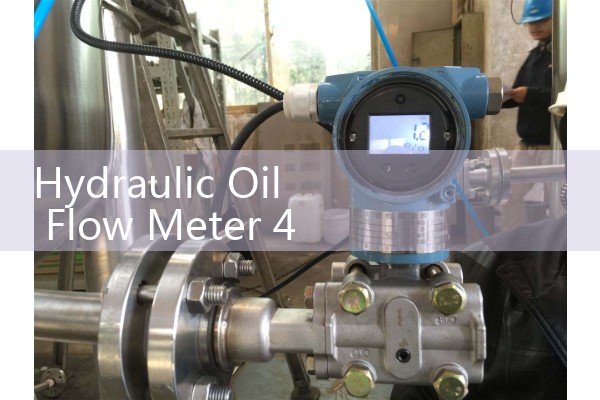
A proper high-volume pump test layout pairs the flow meter with a pressure transmitter and a PT100 temperature sensor. You install the flow meter downstream of the pressure sensor to avoid cavitation. Straight pipe runs of at least 10 pipe diameters upstream and 5 downstream keep the flow profile stable. For a DN100 line, that means 1 meter upstream and 0.5 meter downstream. We often supply our 2600 series pressure transmitters with 4-20 mA HART output and a paperless recorder to log flow, pressure, and temperature together. One customer in Brisbane built a test stand for 500 kW piston pumps. They used a TR100 turbine meter, a 0-600 bar pressure transmitter, and our VR40 paperless recorder. The system calculates pump volumetric efficiency automatically.
Silver Instruments Flow Meter Models for Pump Testing
We recommend two models for a 4-inch high-volume hydraulic oil test bench.
OGF100 Oval Gear Flow Meter
Material: Cast iron or stainless steel
Connection: ANSI 150 lb or DIN PN16 flange
Flow range: 30 - 600 L/min
Accuracy: ±0.5
Output: Pulse, 4-20 mA, optional HART
Max pressure: 250 bar
Viscosity range: 1 - 1000 cP
TR100 Turbine Flow Meter
Material: Stainless steel body with tungsten carbide bearings
Connection: ANSI 150 lb or DIN PN16 flange
Flow range: 100 - 2000 L/min
Accuracy: ±1.0% for oil
Output: Pulse, 4-20 mA
Max pressure: 200 bar
Suggested viscosity: 2 - 50 cSt
Both meters ship from our factory to any country. We handle documentation for import into Australia, Indonesia, Saudi Arabia, Brazil, and Nigeria. Delivery takes 2 to 3 weeks by air for small quantities.
Real Test Stand Example
Last year a hydraulic repair center in Surabaya, Indonesia needed a meter for testing CAT 320 excavator main pumps. They had a 4-inch test loop running ISO VG 46 oil at 55 degrees Celsius. Flow during the test reached 400 L/min. They selected the OGF100 oval gear meter because the viscosity changed with temperature. The meter kept accuracy within 0.5 percent. They also used our pressure transmitter and a paperless recorder. The setup paid for itself in six months by catching worn pumps before customer shipment.
Send Your Parameters for a Quote
We do not give online pricing because each test stand layout is different. Tell us your oil type, viscosity at 40 degrees Celsius, maximum flow rate, pump pressure, and pipe standard. We will return a quotation with the flow meter, sensors, and recorder if needed. Email your details to our team or use the inquiry form on flow-meter.com.au.
FAQ
Q: What flow meter technology is best for high-volume hydraulic oil pump testing?
A: Oval gear meters offer high accuracy that is stable across viscosity changes. Turbine meters suit high flow rates above 600 L/min with lighter oil. Silver Instruments supplies both in 4-inch DN100 size.
Q: Can I use a turbine flow meter with ISO VG 68 oil?
A: Turbine meters struggle above 50 cSt. At 40 degrees Celsius, ISO VG 68 reaches roughly 68 cSt. The gap between the rotor and housing may cause non-linear errors. We suggest an oval gear meter for oils above 50 cSt.
Q: What upstream straight pipe run does a 4-inch flow meter need?
A: Ten diameters upstream and five diameters downstream is standard. For DN100 that is 1000 mm straight upstream and 500 mm downstream. If you have space limits, a flow straightener can reduce this to 5D upstream.
Q: Do you offer ATEX certified meters for oil mist areas?
A: Yes. The OGF100 and TR100 can be supplied with ATEX Ex ia or Ex d certification for Zone 1 or Zone 2. You need to specify during inquiry. We have ATEX certificates for the flow meter and the 4-20 mA transmitter circuit.
Q: Can the meter connect to a PLC without extra converters?
A: Both meters deliver pulse and 4-20 mA outputs wired directly to analog input modules on Siemens S7-1200, Allen-Bradley MicroLogix, or Mitsubishi FX series PLCs. No converter required.
 Hot News
 Related AD