

『10 L/H Flow Meter Chemical Process Line Engineering』Related information(flow rotameter|digital flow meter|balo meter|hydraulic flow meter|volumetric meter|positive displacement meter|pitot tube flow meter|displacement meter|cfm meter|variable area flow meter|inline flow meter|differential pressure flow meter|calibrated flow meter|velocity meter|paddle wheel flow meter|oval gear flow meter|anemometer hvac|multiphase flow meter|doppler flow meter|thorpe tube flowmeter|heat flow meter)
10 L/H Flow Meter Chemical Process Line Engineering
Quick Answer: A 10 L/h flow meter for chemical process lines must handle low flow stability, aggressive media, and tight accuracy demands. Silver Instruments supplies micro oval gear meters, Coriolis mass meters, and small-bore electromagnetic meters specifically built for flows from 0.2 L/h up to 20 L/h. The right choice depends on fluid viscosity, conductivity, and the need for mass or volume measurement.
Most engineers skip the catalog hype and go straight to three numbers: minimum flow 0.5 L/h, accuracy ±0.5 % of reading, and wetted material Hastelloy C22 or PTFE-lined 316L. A 10 L/h dosing line for catalyst injection in Thailand runs 24/7 at 6 bar and 65 °C. If the flow meter drifts by 0.3 L/h over two days, the reactor yield drops and nobody notices until the QC lab flags a color shift. That is the real cost of picking the wrong meter.
We have seen this on customer sites many times. A paint manufacturer in Indonesia replaced a miniature turbine meter with a Silver Instruments oval gear flow meter model SIOG-DN2 five years ago. The process line adds hardener at exactly 9.8 L/h into a solvent-based polyurethane blend. The old turbine would stick when viscosity climbed past 120 cP in the early morning batch. The oval gear meter just kept turning. It has no need for straight pipe runs and no sensitivity to viscosity swings between 5 and 200 cP. That simple change removed four unplanned stoppages per month.
Which Flow Meter Principles Work at 10 L/H
At 10 L/h, not every technology scales down cleanly. Oval gear positive displacement meters dominate for oils, solvents, and polymers up to 500 cP. The SIOG series from Silver Automation Instruments uses PEEK gears and ceramic bearings for chemical compatibility. A DN2 meter with 4-20 mA HART output can measure from 1 L/h to 20 L/h with a repeatability of 0.15 %. This is the workhorse for additive injection and pilot plant feed lines.
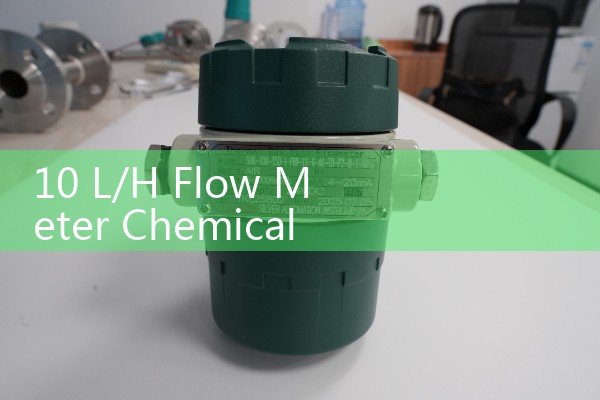
Coriolis mass flow meters step in when density or mass flow matters. A micro-bend Coriolis sensor with 1/8-inch tube size, such as the Silver Instruments SICM-DN3, directly reads kg/h at 10 L/h for fluids with density near 0.9 kg/L. No need to program a separate density value. The same meter sees air slugs and warns the DCS via a status bit. In a Mexican chemical site making emulsifiers, a SICM-DN3 caught a pump cavitation event at 03:17 AM because the mass flow rate dropped to 4.6 kg/h for seven seconds. The control room operator saw the alarm and swapped the strainer before the emulsion broke. Pure time saved.
Electromagnetic flow meters can also work at 10 L/h, but only with fluids above 5 µS/cm conductivity. A DN3 or DN4 magmeter with PTFE lining and Hastelloy electrodes from the Silver Instruments SIMAG-D series handles diluted acids and caustic soda cleanly. The minimum flow capability is around 0.8 L/h, so a 10 L/h set point is well within the measurable range. The output is volumetric, but you pair it with a temperature sensor and scale 4-20 mA signal in the PLC. This setup costs less than a Coriolis and works when the fluid is water-like with conductivity above 20 µS/cm.
Material Choices That Determine Lifespan
Chemical process lines at 10 L/h often carry something nasty. We keep a simple rule: if the fluid contains chlorides above 100 ppm at 40 °C, skip 316L and pick Hastelloy C276 or C22 for wetted parts. For sulfuric acid above 80 % concentration, PTFE-lined meters with tantalum electrodes survive where metal dissolves. A customer in Saudi Arabia feeds 98 % sulfuric acid at 9.5 L/h into a sulfonation reactor. The Silver Instruments SIMAG-DN4 with PTFE liner has been in service for 14 months with zero drift. The previous all-stainless magmeter lasted three months and developed pitting deep enough to change the meter factor by 2.1 %.
O-rings matter too. FKM works for most solvents up to 120 °C. FFKM (Perfluoroelastomer) handles aggressive aromatics and ketones. We specify Kalrez or Chemraz on SIOG oval
Real-World Installations and Piping Tricks
Because a 10 L/h line is often just 6 mm or 1/4 inch OD tubing, vibration from nearby pumps kills measurement. In practice, isolate the meter with a small bracket fixed to a rigid structure, not dangling from the tubing. A seafood processing plant in Chile uses a Silver Instruments SICM-DN3 Coriolis to dose natural smoke flavor at 8.2 L/h. The original mounting let the meter shake with a diaphragm pump pulse. After adding a simple stainless steel clamp to a wall bracket, the standard deviation on mass flow dropped from 0.18 kg/h to 0.03 kg/h.
Air elimination is the other silent killer. Oval gear meters trap gas and under-read. Install a small Y-strainer and a manual air vent upstream. For critical dosing, we often recommend a Coriolis mass meter precisely because it outputs a density alarm when air fraction exceeds 1 %. Most engineers skip this part during commissioning and then chase phantom flow errors for weeks.
Output Signals and DCS Integration
A 10 L/h meter in a chemical plant rarely runs standalone. The PLC or DCS expects 4-20 mA HART, pulse for totalizing, or Modbus RTU. Silver Instruments meters come standard with 4-20 mA + pulse, and HART is enabled by default on Coriolis and oval gear models. You can read flow, temperature, and two diagnostic registers over a single pair of wires. In a recent project in Turkey, a system integrator polled 12 Silver Instruments SIOG-DN4 oval gear meters on a RS-485 bus, updating flow rates every 500 ms without a single missed packet over six months. They saved eight analog input cards and reduced cable runs by 170 meters.
Open collector pulse output for totalizing is standard on SIOG models. The pulse scale is factory set at 0.1 mL per pulse, so at 10 L/h you get about 27.8 Hz. This makes it easy to confirm delivery volume on a local batch controller like the Silver Instruments SIBATCH-2. No special gateways needed.
FAQ: 10 L/H Flow Meter Chemical Process Line
Can I use a turbine meter for a 10 L/h chemical line?
Miniature turbine meters can measure 10 L/h, but their accuracy drops fast when viscosity changes by more than 5 cP. Chemical additives often swing from 0.8 cP to 200 cP across a single batch. Oval gear or Coriolis meters handle that range without recalibration.
What is the smallest pipe size for a 10 L/h Coriolis sensor?
DN3 (1/8 inch) is standard for 10 L/h. Silver Instruments SICM-DN3 covers 0.6 kg/h to 40 kg/h with ±0.2 % accuracy. This matches most catalyst and surfactant dosing lines.
What wetted materials do I need for 30 % HCl at 10 L/h?
For hydrochloric acid, specify Hastelloy C276 electrodes in a magmeter or PTFE-lined meter body. Oval gear meters can use PEEK gears and Hastelloy C276 housing. Avoid stainless steel entirely.
How do I confirm a 10 L/h meter reading on site?
Use a graduated cylinder and a stopwatch. Fill for exactly 60 seconds and multiply by 60 to get L/h. For solvents, use a beaker on a precision balance and measure grams per minute, then convert with density. This beats trusting a bypass rotameter.
What flow meter price range should I expect for a 10 L/h chemical duty meter?
A basic oval gear meter with 4-20 mA starts around USD 480. A micro Coriolis with HART, Hastelloy tubes, and ATEX Zone 1 approval ranges from USD 2,800 to 3,900. These are Silver Instruments direct supply prices for end users and integrators.
Next step: Send us your pressure (bar), temperature (°C), pipe size (DN), and flow range. Tell us the chemical name and concentration. We will email you a recommended model, data sheet, and a price quote within one working day. Reach us at flow-meter.com.au or call our Sydney office at +61 2 8003 4059.
 Hot News
 Related AD