

『Hydraulic Pressure and Flow Meter: Balancing Complex Circuit Parameters under Variable System Loading Conditions』Related information(flow rotameter|digital flow meter|balo meter|hydraulic flow meter|volumetric meter|positive displacement meter|pitot tube flow meter|displacement meter|cfm meter|variable area flow meter|inline flow meter|differential pressure flow meter|calibrated flow meter|velocity meter|paddle wheel flow meter|oval gear flow meter|anemometer hvac|multiphase flow meter|doppler flow meter|thorpe tube flowmeter|heat flow meter)
Hydraulic Pressure and Flow Meter: Balancing Complex Circuit Parameters under Variable System Loading Conditions
Quick Answer: A hydraulic pressure and flow meter with a fast response time and a wide turndown ratio handles variable loading conditions better than two standalone devices. For most circuits, select a flow meter sized from DN15 to DN50 and a pressure transmitter with 4-20 mA HART output. Silver Instruments supplies both units as a calibrated pair for mobile and industrial hydraulic systems.
Why Variable Loading Breaks Standard Hydraulic Measurements
Many hydraulic systems do not run at one steady pressure. A press closes at 40 bar and then jumps to 280 bar in two seconds. A winch motor sees full flow at startup and almost zero flow during hold. A compact hydraulic power unit on a drilling rig cycles between 10 kg/h and 140 kg/h of oil flow. Standard flow meters and pressure gauges often miss these swings. The mechanical parts in a gauge cannot track the pressure spike. A turbine flow meter may lose accuracy below 10 percent of its range. In practice, the reading looks right on the panel but the actual circuit condition is different.
We have seen this on customer sites many times. A hydraulic repair shop in Surabaya, Indonesia replaced one pressure gauge three times in eight months. The gauge was not defective. The load cycling on their barge crane was faster than the gauge response. That problem stopped only after they installed a pressure transmitter with 4-20 mA HART and logged the data on a paperless recorder.
Pressure and Flow as a Combined Signal
A single pressure reading does not tell you how much hydraulic oil is moving. A single flow reading does not tell you the load condition. When the two signals are logged together, you can see the real operating point of the circuit. For example, a hydraulic pump test bench needs flow at a known pressure to confirm pump wear. A cylinder test rig needs pressure drop across a valve while flow stays constant. A power unit for a food processing press needs both signals to detect partial blockage in the return line.
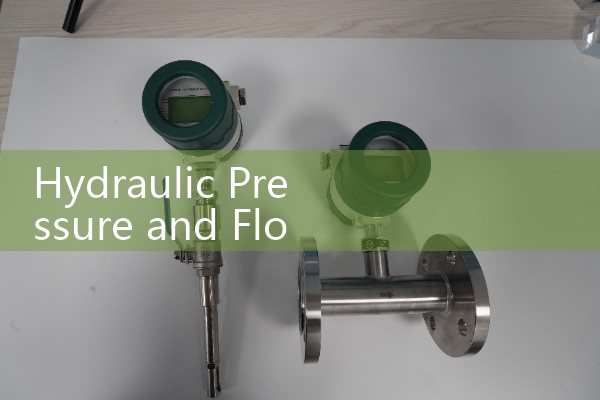
Silver Instruments supplies the SPT-100 pressure transmitter and the SGO series oval gear flow meter as a matched set. The SPT-100 measures from 0 to 600 bar with an accuracy of 0.25 percent full scale. The SGO flow meter handles hydraulic oil from 1 to 1200 cP and covers DN10 to DN80 lines. Both devices output 4-20 mA. The signals can go to a PLC, a local display, or a paperless recorder without a pulse converter.
Field Example: Vietnam Injection Molding Plant
A plastic parts manufacturer outside Ho Chi Minh City ran six injection molding machines with a central hydraulic power pack. The plant manager suspected one machine was drawing too much flow during the cooling phase. The maintenance team had no way to prove it because the machine only ran at full load for 9 seconds per cycle. Standard clamp-on ultrasonic meters could not lock onto the oil flow profile because the pipe was DN25 and the velocity was low. The plant installed one SGO-20 oval gear flow meter and one SPT-100 pressure transmitter on the suspect machine. The logged data showed a 32 percent flow loss during the cooling phase. The root cause was a worn proportional valve spool. Repairing that valve saved the
This kind of diagnosis works because the flow meter and pressure transmitter respond at the same sampling speed. The oval gear meter has a turndown ratio of 10 to 1. The pressure transmitter has a response time under 10 milliseconds. That is fast enough for most industrial hydraulic circuits. High speed servo hydraulic circuits may need an even faster pressure sensor. But for standard power units, presses, winches, and test benches this pair is practical.
Recommended Sensor Pair for Hydraulic Circuits
For lines from DN15 to DN25, use the SGO-15 oval gear flow meter with the SPT-100 pressure transmitter. For lines from DN25 to DN50, use the SGO-25 or SGO-40. For flows above 100 L/min, the SGO-50 or a vortex flow meter works better. Always install the flow meter after a strainer. Hydraulic oil carries metal particles after pump wear. Those particles can damage close tolerance gears in an oval gear meter.
For hazardous area installations, the SPT-100 pressure transmitter can be supplied with ATEX Zone 1 certification. The SGO flow meter has an optional PT100 temperature element. The temperature signal is useful because oil viscosity changes with temperature. A 32 cSt oil at 40 °C may drop to 6 cSt at 90 °C. Flow readings need temperature correction if the circuit operates across a wide thermal window.
FAQ: Hydraulic Pressure and Flow Meter Questions
Q: Can I use an electromagnetic flow meter for hydraulic oil?
A: No. Hydraulic oil is non conductive. An electromagnetic flow meter needs a conductive liquid such as water or wastewater. For hydraulic oil use an oval gear flow meter, a gear flow meter, or a turbine flow meter.
Q: What pressure range should I specify for a hydraulic system?
A: Send us your pump pressure, relief valve setting, and maximum load spike. Most standard industrial circuits fit the 0 to 400 bar range. Mobile machinery often needs 0 to 600 bar. The SPT-100 covers both ranges.
Q: Do I need a flow meter and a pressure transmitter or is one device enough?
A: You need both if you are diagnosing circuit balance, pump wear, or valve leakage. Pressure alone cannot tell you flow loss. Flow alone cannot tell you load condition. The two signals together give a full operating picture.
Q: Can the oval gear flow meter handle cold start viscosity?
A: Yes, at moderate flow rates. Cold hydraulic oil can exceed 800 cP in cold climates. The SGO flow meter is rated for up to 1200 cP. But at very high viscosity the maximum flow rate drops. Specify your minimum startup temperature so we can size the meter correctly.
Q: What output signals do these devices provide?
A: The SPT-100 pressure transmitter provides 4-20 mA with HART. The SGO flow meter provides 4-20 mA, pulse output, or Modbus RTU. Silver Instruments can configure both devices to the same protocol before shipment.
Contact Silver Instruments for a quotation. Send us your pressure (bar), temperature (°C), pipe size (DN), and flow range. Our team will select the correct pressure and flow meter pair for your hydraulic circuit. Tel: +86-25-68650347. Whatsapp: +86-25-52155837. WeChat: +86 15365082610.
 Hot Blog
 Related AD