

『High Accuracy Gas Flow Meter Selection: Choosing Custody Transfer Ultrasonic vs Coriolis Tech』Related information(flow rotameter|digital flow meter|balo meter|hydraulic flow meter|volumetric meter|positive displacement meter|pitot tube flow meter|displacement meter|cfm meter|variable area flow meter|inline flow meter|differential pressure flow meter|calibrated flow meter|velocity meter|paddle wheel flow meter|oval gear flow meter|anemometer hvac|multiphase flow meter|doppler flow meter|thorpe tube flowmeter|heat flow meter)
High Accuracy Gas Flow Meter Selection: Custody Transfer Ultrasonic vs Coriolis Tech
Quick Answer: For high accuracy gas custody transfer, choose an ultrasonic flow meter if your pipe is DN80 or larger and you need low pressure loss. Choose a Coriolis mass flow meter if your line is smaller than DN80, you need direct mass flow in kg/h, or gas density data matters for billing. Send us your pressure in bar, temperature in °C, pipe size DN, and flow range for a proper technical quote.
Most engineers ask us the same question when they spec a gas flow meter for custody transfer. Should they install an inline ultrasonic meter or a Coriolis mass flow meter? Both are accurate. Both can measure natural gas, biogas, hydrogen blends, carbon dioxide, oxygen, nitrogen, and compressed air. But the best choice changes with pipe size, pressure, gas composition, installation space, and local regulations.
Silver Automation Instruments supplies both ultrasonic gas flow meters and Coriolis mass flow meters to customers in Southeast Asia, Latin America, the Middle East, and Africa. We have seen a gas distributor in Vietnam replace turbine meters with ultrasonic meters on a DN300 pipeline. We have also seen a specialty gas blender in Qatar use a DN15 Coriolis meter to bill customers by mass because the gas density changed a lot with temperature.
When an Ultrasonic Gas Flow Meter Makes More Sense
An inline ultrasonic flow meter measures the transit time difference between two ultrasonic signals. One signal travels with the gas flow. One signal travels against it. The meter calculates gas velocity from that time difference and then calculates volume flow at line conditions. With pressure and temperature transmitters, the flow computer converts that volume to standard or normal volume. Accuracy is typically ±0.5% of reading for custody transfer models and ±1.0% for general process models.
Ultrasonic meters work well on DN80, DN100, DN150, DN200, DN300, and larger lines. They have no moving parts. Pressure loss is almost zero. That matters a lot in natural gas distribution where every bar of upstream pressure is expensive. They also handle bidirectional flow without extra mechanical parts.
Here is the thing. Ultrasonic meters need straight run upstream and downstream. Most custody transfer installations need at least 10D upstream and 5D downstream from a bend or valve. Some models can handle less straight run if they are multipath. Three-path, four-path, or six-path designs reduce the effect of swirl and uneven velocity profiles. In practice, a four-path ultrasonic meter can work with 5D upstream in a tight compressor station. But you must confirm the flow profile with the manufacturer first.
We have supplied ultrasonic gas meters for biogas plants in Thailand and natural gas pressure reduction stations in the Philippines. The main reasons were low maintenance and low pressure loss. In one DN250 biogas line, the customer measured 8,500 m³/h at 0.8 bar(g). An ultrasonic meter worked better than a Coriolis meter because a Coriolis meter in DN250 would have cost nearly four times more and would have added too much pressure drop.
When a Coriolis Mass Flow Meter Makes More Sense
A Coriolis mass flow meter measures mass flow directly. It does not need pressure or temperature compensation to get a mass flow reading. The meter also outputs gas density in kg/m³ as a second variable. Accuracy can reach ±0.1% to ±0.35% of rate for gas applications. That level is higher than most ultrasonic gas meters, especially on small lines.
Coriolis meters are the better pick for DN3, DN6, DN10, DN15, DN25, DN40, and DN50 gas lines. They are common in hydrogen fueling test stands, CNG dispensers, specialty gas mixing skids, and high pressure gas injection. In these applications the pipe is small but the gas value per kg is high. A small billing error costs a lot. The direct mass measurement is also useful when gas composition changes frequently.
So why not use Coriolis for every gas custody transfer line? The main limits are pressure drop, cost on large lines, and weight. A DN80 Coriolis meter weighing 120 kg is not practical for a 10 inch pipeline at 3 bar. A DN200 Coriolis is possible but very expensive and often needs special supports. Most engineers skip this part until the first maintenance shutdown. Then the support structure, vibration isol
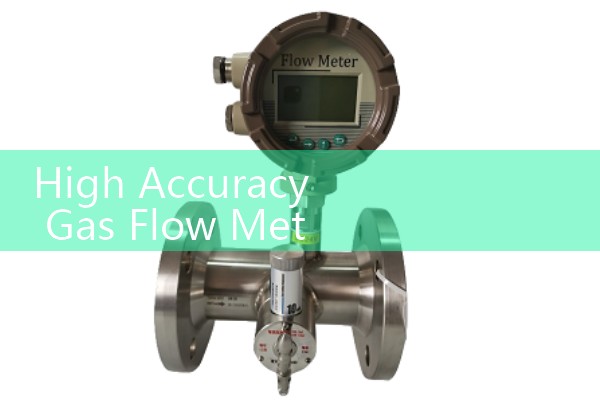
Last year a customer in Mexico asked us for a gas flow meter for a DN40 natural gas line entering a power plant. Gas pressure varied from 4 bar to 18 bar. Temperature varied from 5 °C to 45 °C. They wanted billing accuracy better than ±0.5% and a local display. We supplied a DN40 Coriolis mass flow meter with 4-20 mA HART and RS485 Modbus outputs. They used the density output to detect gas quality changes from different suppliers. That installation paid for itself in eight months.
Custody Transfer Standards and Certifications
Gas custody transfer meters often need type approval. Ultrasonic gas meters may follow OIML R137, AGA Report No. 9, ISO 17089, or regional metrology approvals. Coriolis mass flow meters may follow OIML R137 or local approvals for mass based gas billing. Some countries in the Middle East also require an API MPMS Chapter 14 flow calculation for natural gas. In the EU, some installations need MID certification or ATEX Zone 1 compliance if the gas is flammable.
Silver Instruments supplies meters with 4-20 mA HART, Modbus, and pulse outputs for flow computers. We can provide ATEX Zone 1 or Zone 2 approvals for hazardous areas. Give us the gas composition, moisture level, and area classification. We will confirm the correct model and certification package.
Cost and Maintenance Comparison
An ultrasonic meter for a DN150 natural gas line usually costs less than a Coriolis meter of the same size. Installation cost may be higher for the ultrasonic meter because of straight run and flow conditioners. Maintenance is low for both meters. Ultrasonic transducers may need cleaning if the gas contains heavy hydrocarbons, glycol, or particles. Coriolis tubes may need zero checks if the pipeline vibrates or the meter is mounted near a compressor.
For a small gas line below DN50, the Coriolis meter often has lower total installed cost. It needs very little straight run and no separate density meter. Ultrasonic meters can struggle on small lines because the transit time difference is very small and the accuracy drops.
Five Key Questions About Gas Custody Transfer Flow Meters
Question 1: Can a Coriolis meter be used for gas custody transfer?
Yes. Many countries allow Coriolis mass flow meters for gas custody transfer, especially for compressed natural gas and hydrogen blends. You must check the local approval body and ensure the meter has the right OIML or national certificate.
Question 2: What line size is the crossover point between ultrasonic and Coriolis?
In practice, DN50 to DN80 is the crossover. Below DN50, Coriolis usually wins on accuracy and installed cost. Above DN80, ultrasonic often wins on pressure loss and total cost for gas pipelines.
Question 3: Does an ultrasonic gas flow meter need pressure and temperature compensation?
Yes, for standard volume or mass billing. The ultrasonic meter measures actual volume flow. You need pressure and temperature transmitters and a flow computer to convert to standard cubic meters or mass flow.
Question 4: Which meter handles dirty gas better?
Ultrasonic meters can handle some liquid mist or dust if you use a transducer design with signal processing. Coriolis meters can handle dirty gas but may need filters to avoid coating or erosion of the tubes. In all custody transfer gas lines, a filter or strainer upstream is good practice.
Question 5: What information should we send for a gas flow meter quote?
Send us your gas composition, minimum and maximum pressure in bar, minimum and maximum temperature in °C, pipe size DN, flow range, area classification, and target accuracy. We will recommend the right meter and provide a quote within 24 hours.
Get a Technical Quote from Silver Instruments
Tell us your gas type, pressure in bar, temperature in °C, pipe size DN, and flow range in kg/h or m³/h. Our engineers will answer with a specific meter recommendation, accuracy class, and price. You can reach us on WhatsApp at +86-25-52155837, call +86-25-68650347, or message us on WeChat at +86 15365082610. Silver Automation Instruments supplies ultrasonic gas flow meters, Coriolis mass flow meters, electromagnetic flow meters, vortex flow meters, and pressure transmitters to industrial users in Southeast Asia, Latin America, the Middle East, and Africa.
 Hot Blog
 Related AD