

 Current position > News detail
『How Does Electromagnetic Flow Meter Work: Faraday’s Law of Induction Fluid Basics』Related information(flow rotameter|digital flow meter|balo meter|hydraulic flow meter|volumetric meter|positive displacement meter|pitot tube flow meter|displacement meter|cfm meter|variable area flow meter|inline flow meter|differential pressure flow meter|calibrated flow meter|velocity meter|paddle wheel flow meter|oval gear flow meter|anemometer hvac|multiphase flow meter|doppler flow meter|thorpe tube flowmeter|heat flow meter)
How Does an Electromagnetic Flow Meter Work? Faraday Law of Induction and Fluid Basics
Quick Answer: An electromagnetic flow meter uses Faraday Law of Induction to measure conductive liquid flow. A magnetic field passes through the pipe. Electrodes read the voltage created by the moving fluid. The voltage is proportional to flow velocity. Silver Automation Instruments supplies these meters for water, wastewater, chemicals, food and beverage, and seawater applications.
Working Principle Based on Faraday Law
Faraday Law states that a conductor moving through a magnetic field generates a voltage. In an electromagnetic flow meter the conductive liquid acts as the conductor. The flow meter generates a magnetic field across the pipe. Two electrodes sit flush with the pipe wall. When liquid flows through the field the electrodes detect a small signal. Signal amplitude follows the average flow velocity. Flow rate equals velocity times pipe cross sectional area.
Electromagnetic flow measurement is not mechanical. There are no moving parts in the flow path. Pressure loss is close to zero. The meter works in both directions. Bidirectional flow measurement is standard on Silver Instruments electromagnetic flow meters.
Fluid Conductivity Requirements
The liquid must have a minimum electrical conductivity. Most electromagnetic flow meters need at least 5 µS/cm. Some industrial meters require 20 µS/cm or more. Pure water below 5 µS/cm may not produce a stable signal. Demineralized water and some solvents are often too resistive. In practice most process water, wastewater, seawater, acids, caustic, slurries and food liquids exceed the minimum. If the conductivity is too low a different flow technology is required.
Engineers often ask about oil and hydrocarbon service. Electromagnetic flow meters do not measure oil or diesel. These fluids are not conductive. For fuel oil measurement Silver Instruments recommends oval gear flow meters or Coriolis mass flow meters.
Flow Meter Components
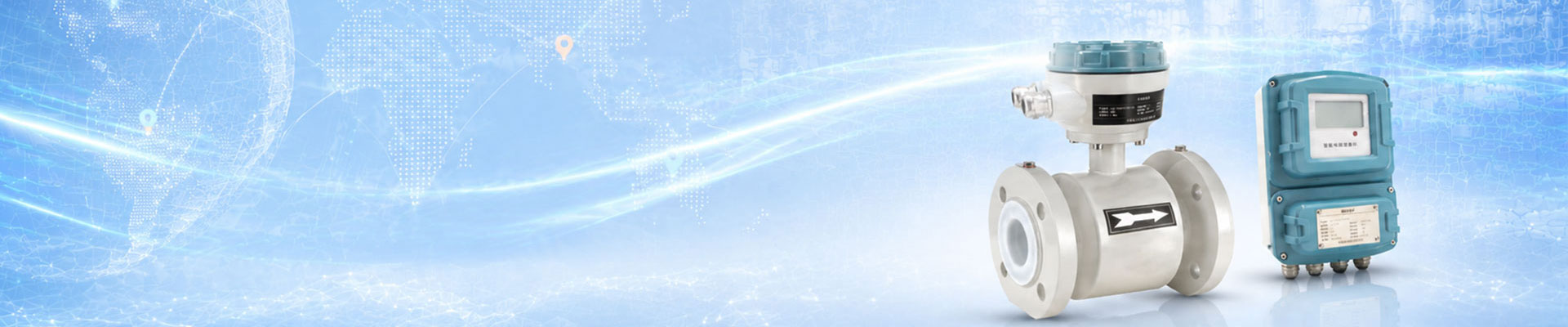
A typical Silver Instruments electromagnetic flow meter includes a sensor and a transmitter. The sensor has a stainless steel or carbon steel body, a PTFE or polyurethane lining, and two or more electrodes. Electrode materials include 316L stainless steel, Hastelloy C, titanium, tantalum and platinum iridium. The transmitter sends excitation current to the coils and processes the electrode signal. Outputs include 4-20 mA HART, pulse, RS485 Modbus and optional digital display.
Line sizes range from DN15 to DN2000. Smaller sizes suit chemical dosing and food additive lines. Large sizes are common in water treatment plants and seawater intake lines. Inline and insertion styles are available. Inline models provide better accuracy for custody transfer and batch control. Insertion models reduce cost on large pipes above DN500.
Installation and Grounding
Grounding is critical. Poor grounding causes unstable readings. The meter body must be grounded to the process piping. For plastic or lined pipes use grounding rings. Silver Instruments ships grounding rings as an option. Install the sensor in a full pipe section. Avoid partial pipes. Mount the meter with a straight run upstream and downstream. Common practice is 5D upstream and 3D downstream. For custody transfer applications follow ISO 20456 or manufacturer guidance.
The meter works in horizontal, vertical or inclined positions. In vertical installations flow should go upward. Air bubbles cause signal noise. Place the meter where gas cannot collect. For slurry service keep velocity above 1.5 m/s to reduce solids settling.
Fluid Basics and Process Conditions
Electromagnetic flow meters handle a wide range of liquids. Accuracy is typically 0.5 percent of reading for standard models. High accuracy versions reach 0.2 percent. Flow velocity range is 0.1 m/s to 15 m/s. Pre
_600x400.jpg)
We have seen these meters on customer sites in many regions. A water utility in Vietnam uses DN600 electromagnetic meters for raw water intake. A chemical plant in Thailand measures sodium hydroxide at 32 percent concentration. A seafood processor in Australia installed a DN25 meter for brine flow with titanium electrodes. A copper mine in Chile uses DN150 meters for slurry density and flow. These jobs are routine for Silver Instruments.
Model Selection and Typical Applications
Select the meter based on pipe size, fluid type, conductivity, temperature, pressure and required output. For clean water choose a rubber or PTFE lining with 316L electrodes. For acids choose PTFE lining and Hastelloy C electrodes. For seawater choose polyurethane lining and titanium electrodes. For food grade service choose sanitary connections and FDA compliant linings. For hazardous areas select ATEX Zone 1 or Zone 2 certification.
Typical applications include raw water, potable water, wastewater, desalination plant brine, chemical dosing, fruit juice, beer, milk, mining slurry, pulp stock and marine cooling water. Silver Instruments supplies flow meters for all these segments. We ship to Southeast Asia, Oceania, Latin America, Africa and the Middle East.
Common Field Issues
Most field problems come from installation errors. Air bubbles, empty pipe, poor grounding and low conductivity are common causes. Some users install the meter directly after a pump. A pump discharge directly ahead of the meter can create turbulence and unstable readings. Use a longer straight run if the pump discharges near the meter. Coatings on electrodes can reduce signal. Choose a self cleaning electrode in oily or sticky fluids. In sludge service use a larger excitation current or a high signal converter.
Another issue is incorrect cable routing. Separate signal cables from power cables. Use shielded twisted pair cable supplied by Silver Instruments. Do not run cables in the same conduit as variable frequency drive output cables. VFD noise can overpower the small flow signal.
Frequently Asked Questions
Q: What is the minimum conductivity for an electromagnetic flow meter?
A: Most meters need at least 5 µS/cm. Some industrial models need 20 µS/cm. Check the fluid before purchase. For very low conductivity choose Coriolis or ultrasonic flow meters.
Q: Can an electromagnetic flow meter measure pure water?
A: No. Pure water has conductivity below 5 µS/cm. Demineralized water and deionized water usually create unstable signals. Use an ultrasonic flow meter instead.
Q: Why is grounding important?
A: Grounding drains external electrical noise. Without good grounding the meter signal drifts and jumps. Use grounding rings on plastic or lined pipes.
Q: Does the pipe need to be full?
A: Yes. The electrodes must contact the liquid. A partially full pipe causes measurement errors. Install the meter in a low point or a rising pipe section.
Q: What outputs are available on Silver Instruments electromagnetic flow meters?
A: Standard outputs are 4-20 mA HART, pulse and RS485 Modbus. Optional outputs include PROFIBUS DP and wireless. Specify the output when you request a quote.
Request a Quote from Silver Automation Instruments
Send us your pipe size (DN), fluid type, conductivity, temperature, pressure and flow range. Our engineers reply within 24 hours with a model and price. Contact Silver Automation Instruments at Tel +86-135-1213-1526. WhatsApp is 86-135-12131526. WeChat is +86 13512131526. Website is flow-meter.com.au.