

 Current position >About Us
Thermal Mass Meters for Greenhouse Gas and Flare Monitoring Systems
Quick Answer: Thermal mass flow meters measure gas mass flow directly without pressure or temperature compensation. For flare gas and greenhouse gas monitoring, select a meter based on gas composition, pipe size, flow range, moisture level, and hazardous area certification. Silver Instruments supplies insertion and inline thermal mass meters with 4-20 mA HART output.
Engineers who monitor CO2, methane, digester gas, or flare gas need a flow meter that works with low pressure and changing gas temperature. Thermal mass meters fit this job because the sensor responds to the cooling effect of gas molecules. The output reads mass flow in kg/h or Nm3/h, not volume flow that drifts with pressure and temperature.
Where Thermal Mass Meters Work Well
Thermal mass flow meters suit industrial gas lines from DN15 up to large stacks and flare headers. Common applications include digester gas at wastewater plants, biogas from palm oil mills, CO2 injection lines in food and beverage plants, and flare gas measurement at oil and gas sites. A wastewater plant in Queensland installed two inline thermal mass meters on digester gas lines. The meters gave stable readings down to 0.5 Nm3/h and survived moisture carryover better than an old differential pressure setup.
Direct Mass Flow Without Compensation
Thermal mass flow meters use two RTD sensors. One sensor measures gas temperature. The other sensor is heated. Gas flow removes heat from the heated sensor. The electronics measure the power needed to keep a constant temperature difference. This power relates to mass flow. Because the reading is direct mass flow, the meter does not need separate pressure or temperature input for standard gas measurement. That reduces installation cost and drift across devices.
Key Parameters for Flare Gas and GHG Service
Always specify gas composition before you order. A flare gas stream may contain methane, CO2, nitrogen, hydrogen, and heavier hydrocarbons. The thermal sensor responds to each gas differently. Silver Instruments asks for the expected gas mixture and the range of mole fractions. This data allows factory calibration against a similar gas mixture or application of correction factors.
Pipe size matters. Inline thermal mass meters fit DN15 to DN100 with flanges or NPT threads. Insertion thermal mass meters fit larger lines from DN80 to DN3000. For flare headers, insertion meters are often the only practical option because the pipe diameter is large and shutdown is costly.
Flow range should be stated in kg/h or Nm3/h. A typical insertion thermal mass meter covers 0.1 to 120 Nm/s. Turndown ratio can reach 100:1. Specify minimum and maximum flow, not only normal flow. Many users forget minimum flow during flaring and then the meter loses accuracy at the bottom end.
Sensor Types and Hazardous Area Options
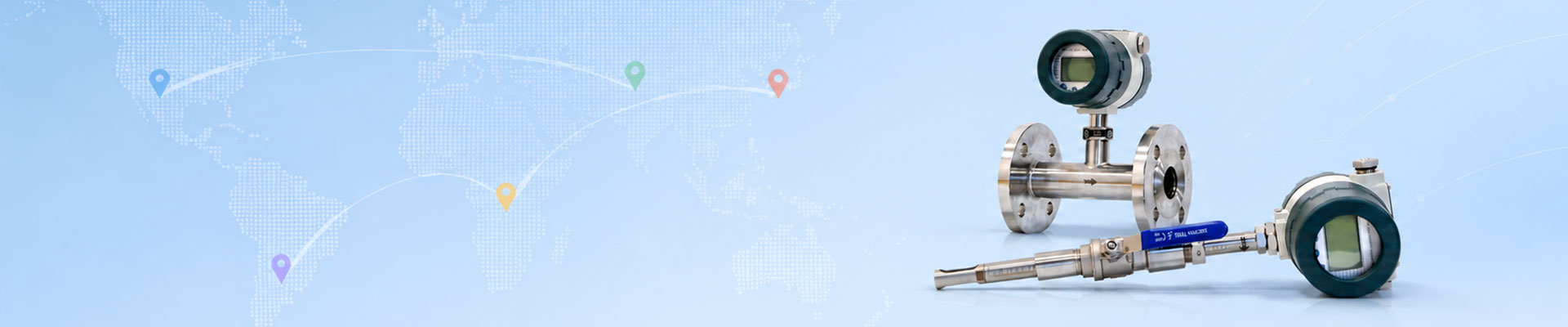
Inline thermal mass meters suit small and medium gas lines where the full flow passes through the sensor. Insertion thermal mass meters suit large ducts, stacks, and flare lines. Insertion probes come with a ball valve retractor assembly for hot tapping, so you can install or remove the probe without shutting down the line. Hot tapping is common at oil and gas sites in Southeast Asia and the Middle East.
For hazardous areas, choose Ex d or Ex ia housings with ATEX Zone 1 or IECEx marking. Flare monitoring installations often require Zone 1 because gas may be present under abnormal conditions. Silver Instruments supplies stainless steel 316L probes and can offer Hastelloy C for acid gas or high hydrogen sulfide streams.
Installation and Calibration Practices
Thermal mass meters need straight run upstream and downstream for a stable velocity profile. A common rule is 20 pipe diameters upstream and 10 pipe diameters downstream. If the flare header has an elb